
Don't ask what the world needs. Ask what makes you come alive, and go do it. Because what the world needs is people who have come alive.
Howard Thurman
Coming alive is as beautiful a thought as it is dangerous. Beautiful because it gives us permission, even a calling, to pursue our own aliveness. Dangerous because most of us have spent years orienting ourselves in the opposite direction. We've been so busy asking what's expected of us, what we should be doing, what others need - that we've lost track of the deeper pulse of our own life.
So what does it actually mean to come alive? What's getting in the way? And what do we need to let go of?
The Ego Issue
The word 'ego' gets thrown around a lot, and more often than not, it's treated as the villain. That's understandable as we tend to turn what we struggle with into an enemy. But the problem isn't that we have an ego. The problem is when it becomes the permanent address where the rest of ourselves reside.
Think of it in three phases. The first phase of life is about forming an ego, a self strong enough to function in the world. We absorb norms, build defenses, and create safety. The butterfly needs the cocoon. The second phase deepens those ego strategies - control, protection, compliance - as we pursue success and belonging in the world. We use our ego to fly, as best we can.
The problem is that these ingrained ego patterns, left unchallenged, become spirit-killing.
David Hawkins, who wrote the classic book Letting Go, explores the accumulating costs that come with suppressing inconvenient feelings, living according to others’ expectations, and burying our desires. Hawkins describes this buildup as a reservoir of emotional weight. Picture a very full backpack, full of psychic baggage. Heavy. Familiar.
And the weight is mostly unconscious. It becomes an anchor we drag around. This anchor not only narrows our perception, it flattens our creativity, and keeps us living smaller than we were made to live.
But eventually, it starts to make itself known. It becomes, in Carl Jung’s words, a lie that starts getting our attention:
We cannot live the afternoon of life according to the program of life's morning, for what was great in the morning will be little at evening, and what in the morning was true, at evening will have become a lie.
The Gift of Letting Go
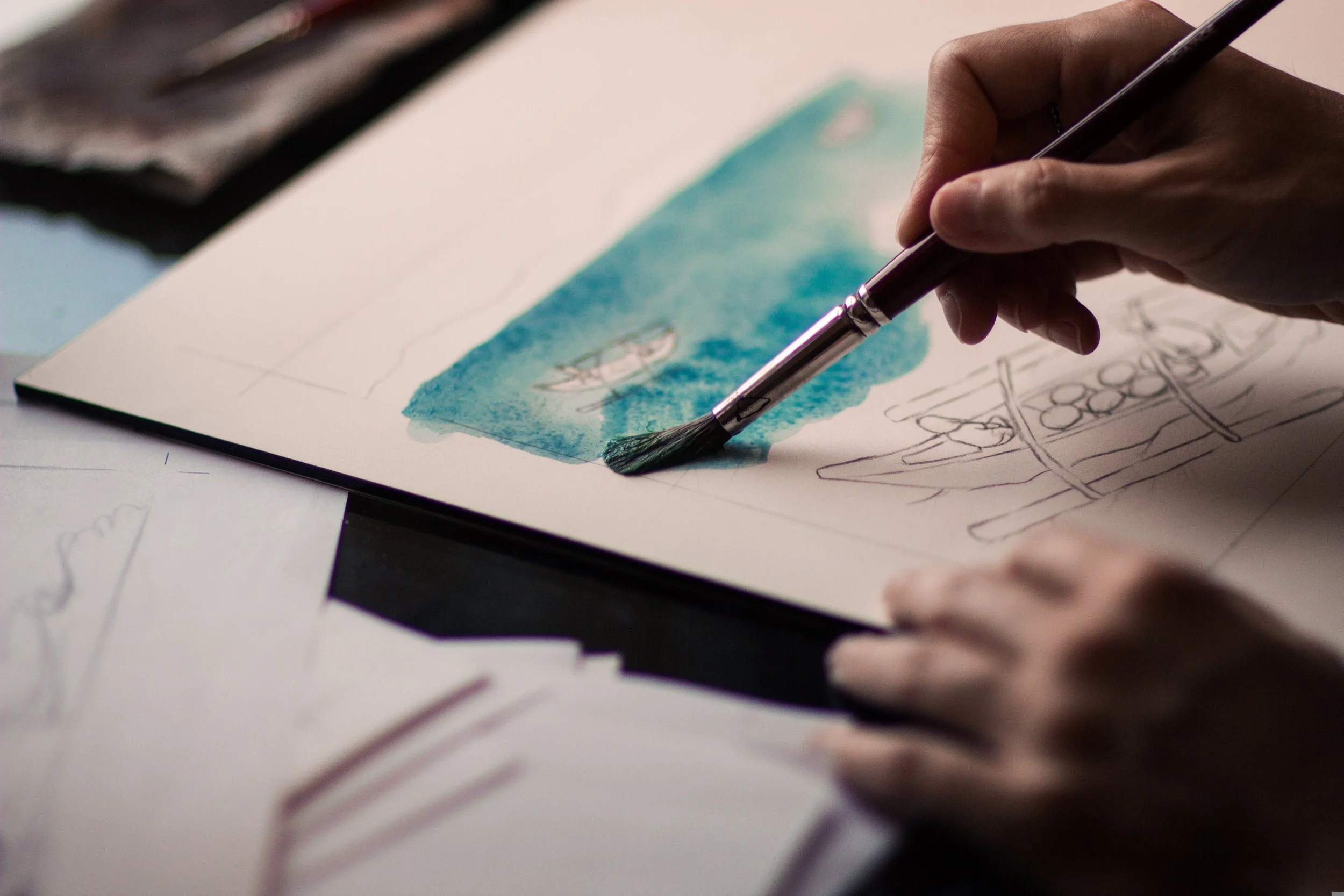
Margaret, a woman in her early sixties, spent decades as the responsible one. The dependable daughter, the steady professional, the one who always took time for others. She loved painting in her twenties, but she'd always found a practical reason to set it aside. As she found herself feeling increasingly empty, she thought more and more about painting.
When she woke up to to the realization that she was living a lie, she picked up her brush again - not for anyone else, just for herself. She stopped caring what others think and saying yes to their every request. With brush in hand, something in her quietly exhaled. Something also activated. She was coming alive by letting go.
The truth is that ego is not fundamentally unhealthy. Like Margaret, we all have a healthy ego that has been trying to get our attention from the start. And we gain it, counterintuitively, by subtraction. Letting go egoically means releasing the personality that has felt perpetually at risk and at stake. We put to rest the small, defended version of who we've been. We claim a sense of self larger than the one we assembled out of fear and caution, and unapologetically choose to live from the parts of ourselves we actually love. The parts that make us come alive.
There's a More Alive You Already in There
The mystics have a word for this releasing work: kenosis, Greek for self-emptying. It sounds austere, but the experience tends to be the opposite: spacious, even joyful. Because what we're emptying out is not the real us. It's the accumulated weight of what we thought we had to be.
The vital, alive self we're moving toward isn't something we have to acquire. It's already there, waiting beneath the noise of the conditioned self - the healthy self beneath the defended one.
We open the door to this aliveness through awareness and intention. The practice is often as simple as pausing, taking a breath, noticing how we've contracted into a smaller version of ourselves—and then choosing, in that moment, to listen for and honor our true self instead.
That move, as Howard Thurman knew, is revolutionary. Not only for ourselves, but for our world.
Next week: Coming Alive Loves to Go Deep