
Part 4 of 5 in our Language of the Deep Series
There is a season in the life of the soul that no guidebook prepares us for.
You wake one morning and discover that the practices that once centered you feel strangely hollow. The prayer that used to be comforting now feels counterfeit. The pilings that have seemed to hold up your life feel like they are crumbling, and no amount of effort seems able to call back the comforts.
Something deep within you has shifted without any consultation or consent.
If you have lived through a season when the spiritual life that once felt alive suddenly seemed distant, you have known how deeply disorienting this is. You’ve known how the very things you trusted most no longer seemed able to carry you. And you’ve likely wondered, quietly or with others, “what’s wrong with me?”
The Dark Night of the Soul
The sixteenth-century Spanish mystic St. John of the Cross gave this season its enduring name: the dark night of the soul.
It’s not depression* exactly, though it often carries that tone. It’s not as simple as doubt, though doubt echoes through the experience. For St. John, it is something deeper and strangely more ripe with potential than either.
It’s a stripping away of the forms and beliefs we have counted on as being real and enduring: our ideas about the Divine, our techniques for reaching it, and our expectations about how spiritual life is supposed to feel and work. What once helped us open to the sacred slips away and becomes more like a veil between us and the sacred itself.
For John of the Cross, this deeper night is not punishment. It is purification. Not purification in the sense of becoming more perfect, but more a loosening of our grip on what we thought we had figured out and what we believed we could control.
When the dark night arrives, one by one, the familiar handholds dissolve. Not because we have failed. But because we were never meant to hold on to them forever.
Something in the soul is fermenting beneath the surface, loosening our attachment to certainty so we can discover something closer to trust.
And that can be terrifying. Because trust asks something of us that certainty never does: it asks us to keep walking when we cannot see the road.
The Alchemist’s Furnace
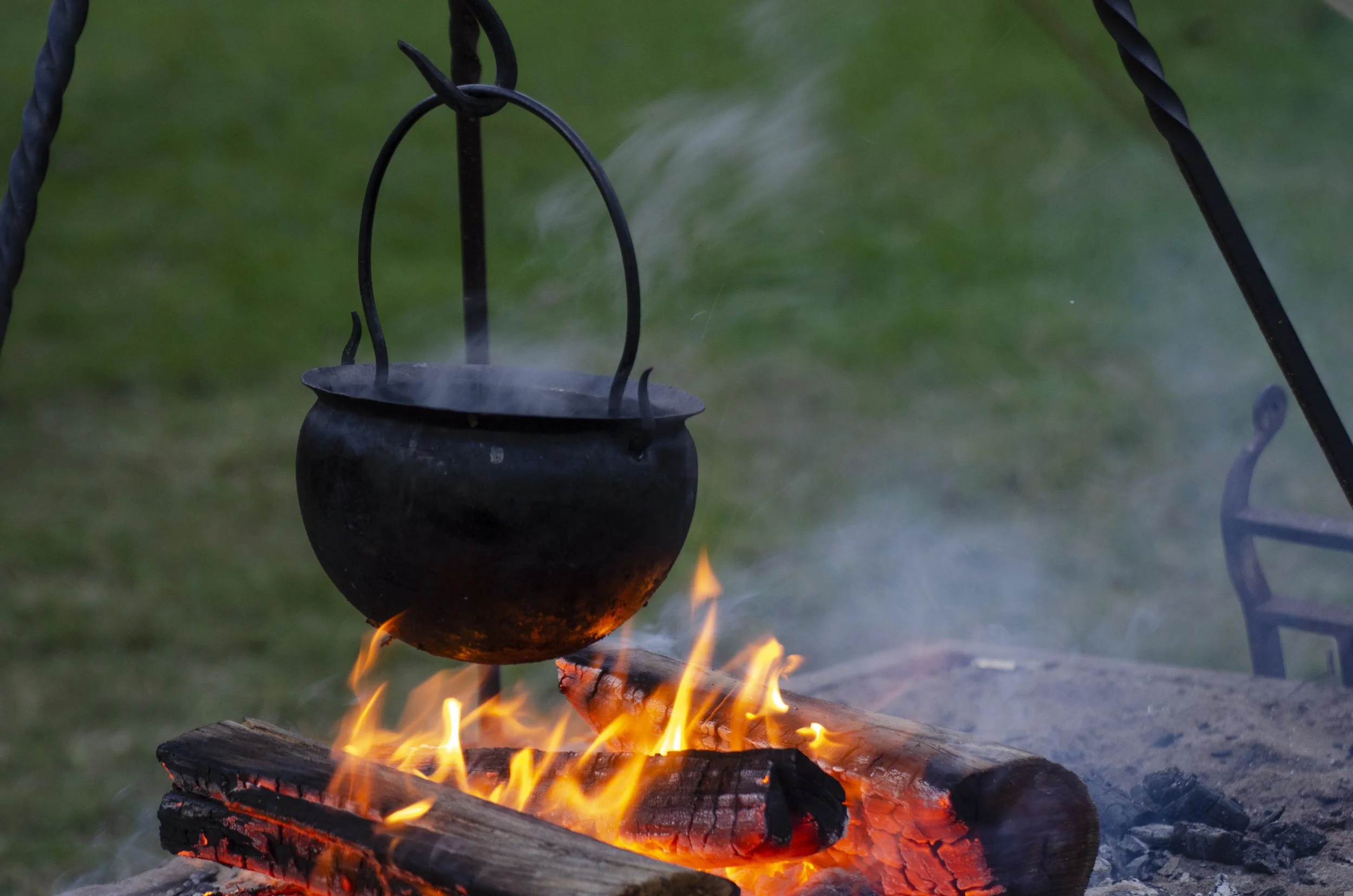
The alchemists of antiquity had their own language for this kind of transformation. They understood that before something new can emerge, something old must first break down. They called this dark stage the nigredo - the blackening, the dissolving of the old form in preparation for something that could not have emerged from it intact.
They did not treat this stage as a mistake in the process. They treated it as the essential starting point of a transformative process. Nothing golden arrives without first passing through the crucible where its familiar shape is unmade.
Alchemy disorients one thing to create another.
The confusion. The flatness. The void. The sense of having lost the thread of your own life. These naturally feel like obstacles standing between you and transformation, but the soul’s alchemy uses them as catalysts for change and as deconstructing forces.
And that is so hard to remember when we are inside it. We want to know what is happening, why it is happening, and when it will be over. We want some evidence that the darkness is taking us somewhere. But the dark night offers very little evidence. It asks us to become intimate with not knowing.
Claire’s Collapse
My chaplaincy student, “Claire,” had spent years building a spiritual life around a view that every word of scripture was true. She inherited that view from her Assemblies of God church, and it provided her with an easy entrance into her Navigators group at college and the seminary degree that followed. It sustained her through break-ups with boyfriends and all the ups and downs of early adulthood.
Then her parents divorced. That was naturally a blow. But the biggest blow came when they were no longer welcome in their church. Something broke in Claire. Soon after, she arrived at our hospital for her summer chaplaincy internship. She was reeling, deep in the throes of a dark period of disorientation.
Through many conversations and personal contemplations, Claire discovered that the dark night was not asking her to find a way back to the certainty she had lost. It was asking her to become someone who could live without it. The faith that had once depended on having the right answers was being broken open into something more spacious. Something that could make room for mystery, grief, questions, and a God who could not be contained by a single interpretation of Scripture.
The loss was real, and painful. But beneath it, something was taking shape. Through the patients she served, Claire encountered a wide range of spiritual paths and ways of making meaning. The old form of her faith began to feel too small, and in its place a deeper trust was emerging.
This is the alchemy of the dark night: what felt like the destruction of faith can, over time, become its transformation. What started as the unimaginable betrayal by her church slowly morphed into a faith no longer confined to a single religious tradition. What emerged was a faith that could recognize the sacred at the bedside of a dying patient, in the quiet of a candle-lit apartment, or on a solitary walk through the woods.
Changing Our View of the Void
My Muse, Joni Mitchell, once sang about a particular kind of comfort that has shades of the dark night:
There’s comfort in melancholy, when there’s no need to explain.
It’s just as natural as the weather in this moody sky today.
A profound shift happens when we stop seeing the void as a crisis to solve, a spiritual failure to diagnose, or a test we have to pass. Instead, we can begin to meet it with presence. The confusion, emptiness, grief, and longing become less like verdicts about who we are, and more like weather moving through the soul. They are real, but they do not have to define us.
This is soul work, and it is not easy. Perhaps that is why we’re so prone to avoid it. We would rather manage the discomfort, find an explanation, or hurry toward solid ground. But the spaciousness this darkness creates is not empty. It is making room for something that could not have been held before: a deeper capacity for faith, love, surrender, and a relationship with the sacred that no longer depends on feeling the Divine presence in order to trust its reality.
What looks like loss, when held with patience and presence, can become a soulful passage into something new, something more. The invitation is not to fight the darkness, nor to manage our way out of it, but to hold it as sacred potential. To trust the process even when we cannot see where it is leading. In this way, the dark night becomes a little like learning to love: something we cannot control or force, but must learn to enter, inhabit, and flow with.
For the final installment of this Language of the Deep series, we’ll turn to the body itself - how our cells keep their own record of these passages, and how, in time, the body can become a kind of sacred text.
* On depression: It’s important to note that depression is a serious psychological and medical condition that is not to be confused with a soulful dark night experience. Sorting out one from the other often requires consultation with psychological, medical, and sometimes spiritual direction professionals.