
Things are often not as they appear.
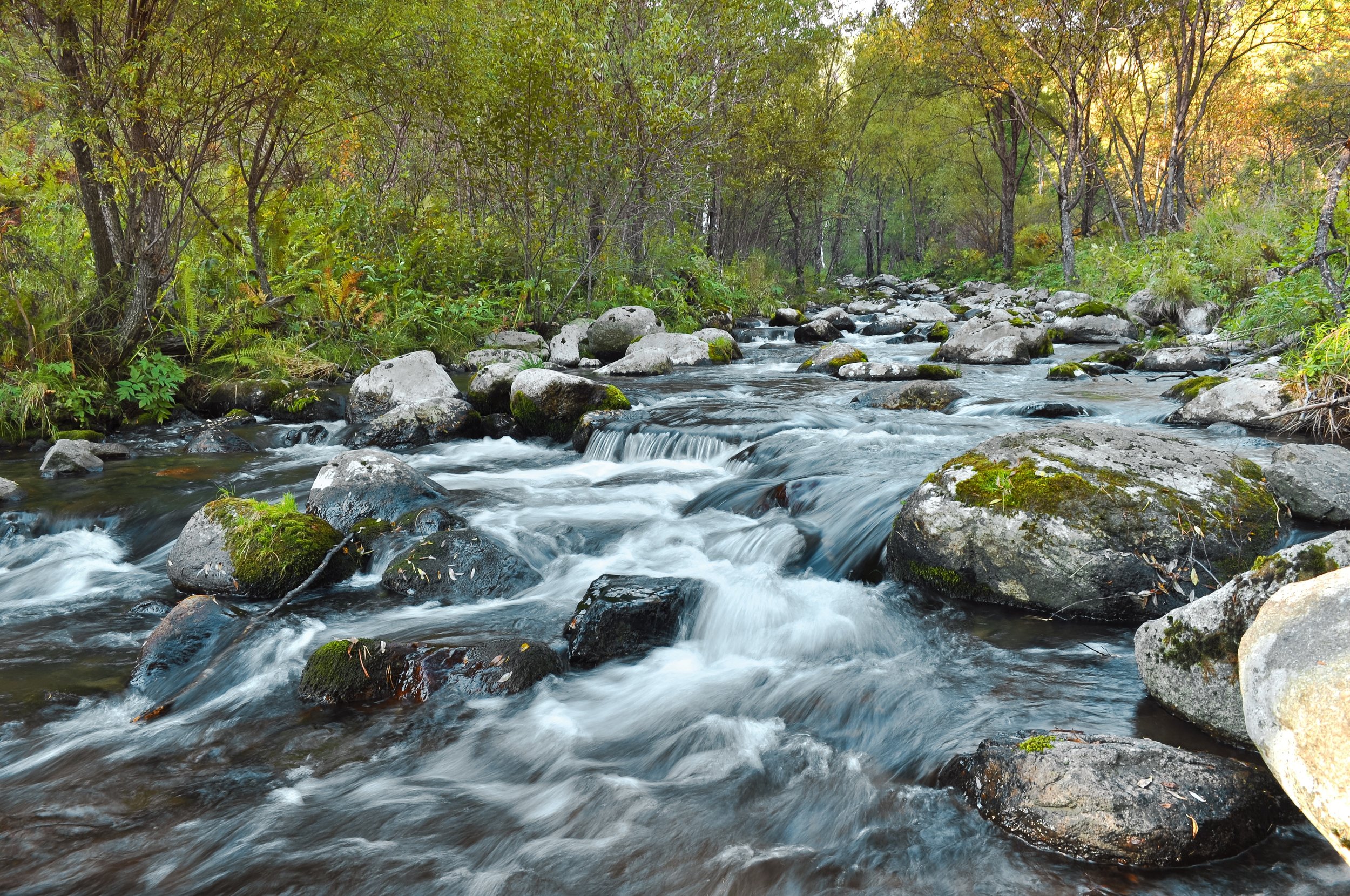
Every election brings a collision of celebration and grief, hope and fear, anticipation and uncertainty. As we find ourselves longing for change, politics can feel like standing in a powerful current that is carrying us toward disaster. So we often frame our political movements as resistance, an effort to dig in our heels and stop the forces threatening to sweep us away. It can feel like we are rocks in the river, trying to stay steady as the political waters push against us.
But what if we’ve misunderstood our place in the river?
Whatever you’re feeling about the election, I invite you to step out of the political rapids for a moment and consider a different way of understanding what’s happening in our country, and in ourselves.
Rocks in the River
In her 2018 essay “We Are Not the Resistance,” published in The New York Times, Michelle Alexander offers a reversal of how we typically understand political resistance. Rather than seeing ourselves as the resistance, struggling against powerful currents, Alexander invites us to turn the metaphor upside down.
She frames it this way: the politicians and movements determined to turn back the clock - to restore an idealized past under banners such as “Make America Great Again” - are actually the rocks in the river. They are the forces resisting the flow of change, attempting to hold back a current carrying change and newness.
We are the river.
Rocks may obstruct the current, but they cannot command it. Water finds its way around, over, and sometimes through whatever stands in its path. It adapts. It persists. It keeps moving.
The river doesn't need to conquer every rock to continue its journey. Its power lies not in defeating every obstacle but in the vitality of the current itself. The power comes from staying in the flow.
As spiritual people navigating a political world, our practice is to stay aligned with the sacred current within us. This is not easy to do. But it’s powerful, because this current is the evolution of consciousness itself, a widening of love and awareness that was moving before any of us arrived and will keep moving long after. Our calling is to stay awake and let it move through us.
The Ancient Wisdom of Flow
These images of river and flow bring to mind the Tao Te Ching, a collection of ancient Chinese wisdom poetry that emerged roughly 2,300 years ago, during a period of tremendous political turmoil, social upheaval, and relentless warfare. Its wisdom developed in, and spoke to, a world desperately searching for order.
A primary response to the turmoil came from Confucianism, in which the value of social harmony was paramount. There was great pressure to honor leaders, to be in lockstep with rules of moral conduct, and to accept one’s place in the hierarchy of the culture. Order was sought through stronger systems of virtue and governance.
The Tao Te Ching offered a counter-response and pointed toward a different harmony. Rather than trusting the leaders of the day, it looked to the rhythms of the natural world and the ways of life rooted in the three virtues of simplicity, compassion, and patience (chapter 67).
Time and again the poetry turns our attention to the image of water. Water is soft, yielding, and seemingly weak. It is not as it appears. It has the power to nourish life, wear away stone, and find its way into the lowest places. It doesn't shout power. It simply embodies it.
The Tao Te Ching invites us to reconsider our assumptions about strength. Conventional wisdom, like conventional political mindsets, associates power with force, dominance, and the ability to make others bend to its will. But water demonstrates another kind of power: the patient, persistent force of life itself.
Power and vitality are not the same thing. A rock can be formidable and yet it is rigid and unable to flow.
Where Spirituality Meets Politics
Bringing a spiritual eye to politics does not lead to passivity, to abandoning our convictions, or to giving up on working for justice. Rather, it frames our thinking and actions within the values of simplicity, compassion, and patience.
When we become entirely defined by what we oppose, the rock begins to determine the shape of our lives. Our attention narrows. Our energy becomes reactive. We organize our identity around the very forces we hope to transform. We may win an election and still remain trapped in fear, contempt, and the endless need to defeat an enemy.
The wisdom of rivers guides us to ground our political engagement in something deeper than our reaction to whoever holds power. Being the river means staying in the flow of a sacred Source. Rivers move. They reshape landscapes. They nourish the living world. Their movement matters.
The spiritual invitation is to recover a larger identity. We are more than Democrats or Republicans, winners or losers, resisters or defenders of the status quo. Beneath these identities lies our shared humanity, our capacity for compassion, and our participation in a life larger than ourselves.
From this deeper place, we remember that things are often not as they appear. We can act with conviction without being consumed by fear or hatred. We can resist injustice without surrendering our souls to apathy or bitterness. We can work for change without believing that everything depends on our ability to control the outcome.
Find Your Flow
So, in this time when the elections hang so heavy in the air, consider these questions:
Where do I become a rock? Where have fear, anger, or the need to be right hardened me? Where am I spending precious energy fighting what I cannot control?
Where can I be a river? What injustice calls for my voice, my resources, my courage, or my compassionate presence? Where is life asking me to act rather than simply react?
How do I remain connected to the deeper current? What practices help me return to the simplicity, compassion, patience, and spiritual grounding that sustain me through uncertainty?
You are the river. And the Source is flowing through you.