Part 1 of 3 in our Becoming Who We Are Series
What comes to mind when you hear the word personality? We usually think of the unique traits that make us who we are. Our personalities hold many gifts, and they have a shadow side.
The shadow side is the stubborn, habitual self that can become remarkably difficult to change. This self is formed around its reactions. It goes to great lengths to defend its familiar way of being in the world. It is the touchy, sensitive, controlling, anxious, or sometimes out-of-touch self that becomes our default setting - the self we slip into without even realizing it.
But our personality that gets rigidly locked in does not begin as a problem. It begins as an act of remarkable intelligence.
As children, each of us discovered a way of finding safety, connection, and belonging within the particular family and world we inherited. We learned how to gain approval, avoid pain, protect ourselves, and make sense of life. Far from being dysfunctional, this is all creative adaptation - our small self finding a way to survive and be okay within the circumstances it was given.
But what served us as a child becomes the very pattern that keeps us small as adults. It’s as if our child-selves are running our adult lives.
The strategy that once required creativity becomes the unconscious driver of our lives. Through thousands of repetitions, our preferred ways of perceiving, feeling, and responding become automatic. Our personality is no longer something we choose. It starts choosing for us.
This is what makes personality so convincing. It stops feeling like something we do and starts feeling like who we are.
One map for understanding this is the Enneagram, a framework that describes nine recognizable personality patterns. Don’t worry if you don’t know or like the Enneagram or don’t know “your type.” What matters more than the map is what lies underneath it. We want to explore how our personality gets formed, and this will help explain why our small selves are so stubborn and persistent.
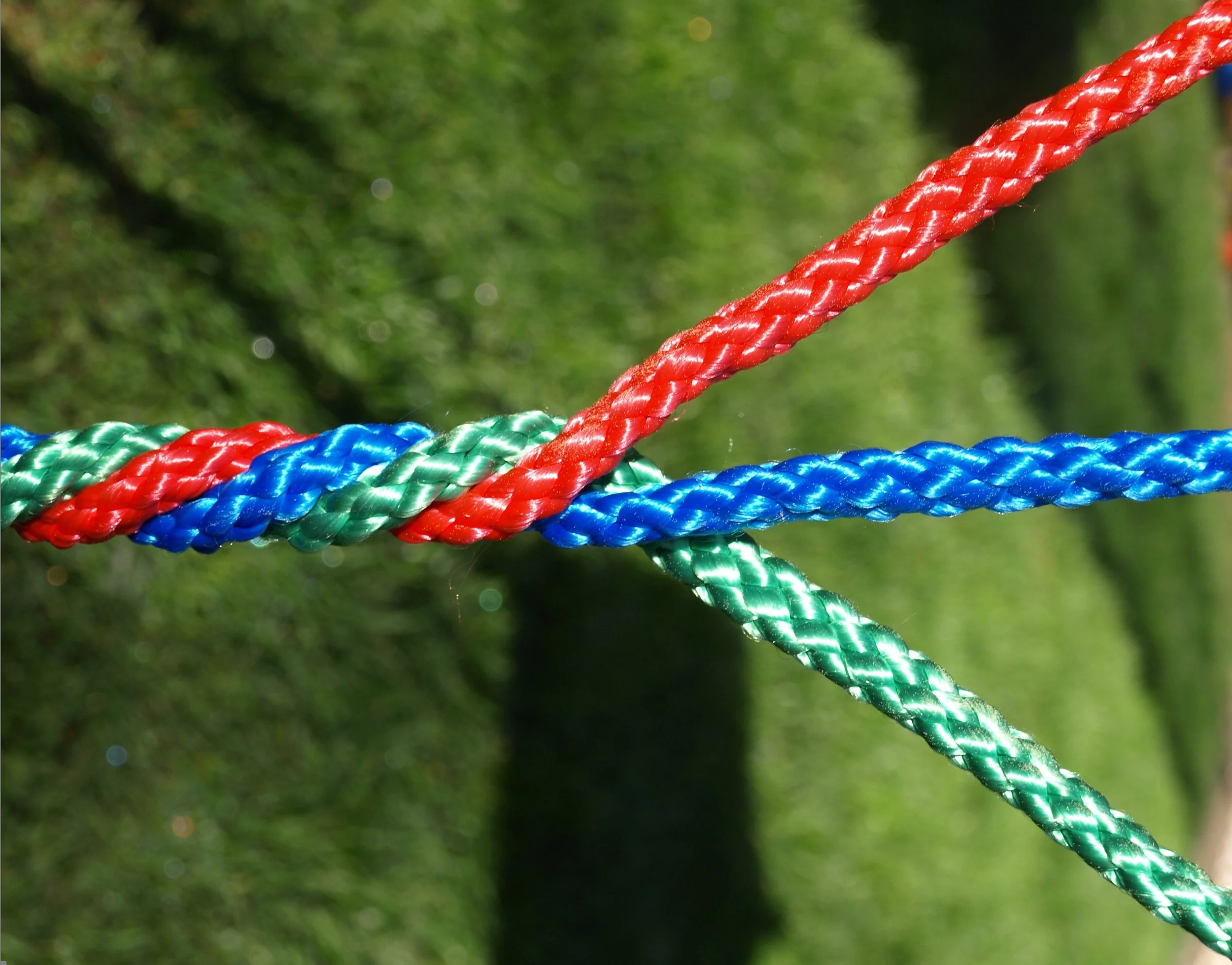
We’ll start by picturing the personality as a three-strand cord.
A cord gets its strength not from a single strand, but from several strands twisted tightly together. In the same way, personality is held together by three distinct patterns that continually entangle themselves together. And, as you will see, each strand is further made up of three dynamics. Three strands, each having three dimensions.
Strand One: Where Attention Gathers
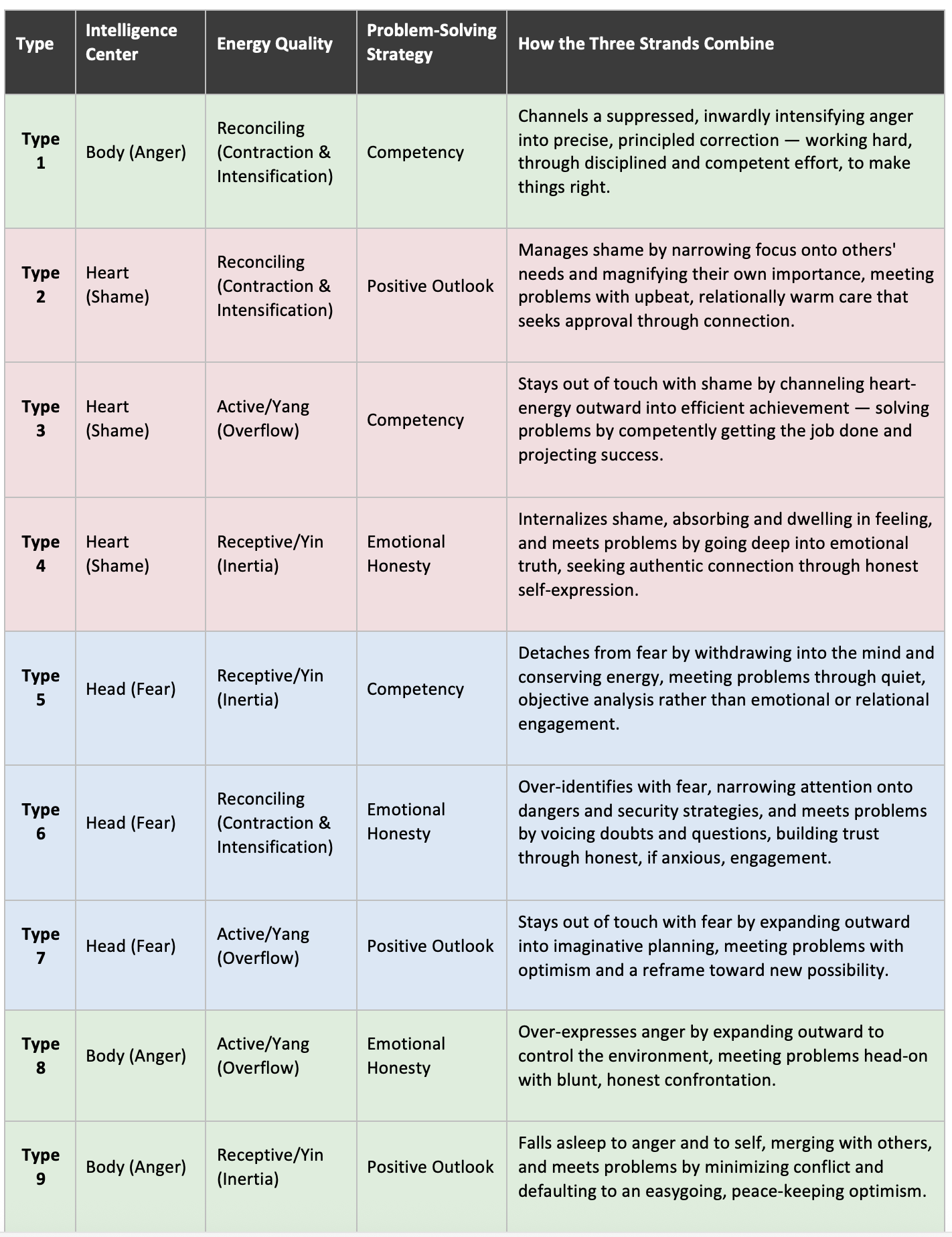
The first strand that shapes our personalities is a Center of Intelligence. Human awareness naturally organizes itself around three interwoven modes of knowing: head, heart, and gut or body.
The Head orients toward conceptual knowing and the security and clarity it strives for.
The Heart orients toward feeling and the approval and emotional connection it seeks.
The Body orients toward energy and instinct and the control and boundaries it wants to navigate.
Of course, we use all three of these. But our individual personality tends to rely primarily on one. This primary center carries a core emotional signature, and it shapes, quietly or not so quietly, how we respond to life.
When the head and thinking are primary, it easily trips into a current of fear and anxiety. When the heart runs the show, we’re prone to shame and sadness. And when the body is in charge, it contends with anger or intensity. These activations shape what we notice before we ever consciously decide what to notice, and they have us responding on autopilot.
Strand Two: How Energy Moves
The second strand that shapes us deeply is an Energy Pattern. Our personality has a habitual energy dynamic that kicks into gear as we encounter new situations. Taoist philosophy represents these three energies in its Yin/Yang symbol:
The Receptive/Yin pattern that has the quality of inertia, pulling energy inward, receiving and absorbing external experience before responding.
The Active/Yang pattern that has the quality of overflow, pushing energy outward, engaging and shaping what is happening around us.
The Reconciling pattern, containing both yin and yang energy. This energy signature flip-flops between contracting and intensifying, so at times it’s receptive and at other times it’s active.
None of these movements is a flaw. The personality naturally falls into one of the patterns as a way of moving toward what helps it feel safe. However, when our personality is in charge, our options for how we respond to life are much narrower.
Strand Three: How We Meet Challenges
The third strand that shapes our personality is a Problem-Solving Orientation. It’s the instinctive move we make when conflict or difficulty appears, and it puts responses in motion long before conscious reflection has a chance to catch up.
The competence pattern views things through a practical lens, and it wants to find a fast track to problem solving.
The positive outlook pattern looks through a hopeful lens, pretty sure that good outcomes can be found (and at times minimizing the problem in the process).
The emotional honesty pattern wants to get real with self and others and find what’s really going on that is causing the challenge.
Again, we all draw on all three of these approaches. But our personality tends to enlist one first - the strategy it believes will most reliably smooth things out, restore equilibrium, or keep us feeling safe. It happens quickly, often before conscious awareness has a chance to intervene.
The Cord, Fully Woven
No single strand explains a personality. It is the twisting together of all three—a particular Intelligence Center, a particular Energy Pattern, and a particular Problem-Solving Impulse. These interact and reinforce each other in ways that shape the personality pattern we come to know as ourselves. By untangling this cord, we can peer more deeply into how our personality was formed and why it holds so tightly to its familiar preferences.
The table below shows the nine ways these three strands can combine. If you are familiar with the Enneagram, you will find each triad connecting with one of the nine types.
But more important than the type is recognizing the patterns underneath it.
Notice the lens through which your attention tends to focus: mental knowledge, feelings, or intuition.
Watch how your energy moves: does it pull inward, express outward, or often alternate between both?
And the next time something goes wrong, pay attention to your first instinct: what happens before you have time to think about what you're doing?
These moments of noticing are the beginning of loosening the cord. This awareness creates space between the impulse and the response. We see the subtle moments when we are taken out of presence, out of the here and now experience. And in the space of that noticing, we begin to manage our personality rather than allowing our personality to manage us.
Next week, we'll explore the predictable pathways our personalities take as they contract into stress and expand toward freedom. It's quite a ride!