
Part 3 of 3 in our reflections on Models of Awareness
Throughout this series, we’ve been exploring models of awareness - maps that help us tune in beneath the surface of experience and guide us toward expanding our awareness.
This week’s map is an ancient one: the seven chakras of the human energy system.
Where the Chakra Map Comes From
The word chakra is Sanskrit for “wheel” or “disc,” and the concept has deep roots in Indian spiritual traditions. The chakra system developed over many centuries, particularly within Hindu and Buddhist traditions, where chakras came to be understood as centers along the central channel of the subtle or energy body. Practices of breath, meditation, visualization, and contemplation were used to engage these centers and cultivate awareness.
There has never been a single, universally accepted chakra system. Different texts and traditions describe different numbers and arrangements of chakras. The seven-chakra system familiar in the West emerged more fully during the twentieth century, particularly in the 1960s and ’70s, and has since become a common reference point in the wider Western spiritual imagination. Along the way, it acquired the familiar rainbow colors, another modern Western addition.
So many hearts and minds have worked with the chakras across centuries and cultures, and the map continues to evolve. That seems fitting for a model of awareness: a living map, held with both respect and curiosity.
The Chakra System as a River
Picture a winding river. It bends left, then right, carving its way across the land. Every bend changes the water’s pace, depth, and direction. A river moves forward by moving side to side.
Think of the chakras this way. Seven bends in a single river of energy flowing from the base of the spine to the crown of the head. The water is the sacred energy itself, present in every bend. What changes is the way the current moves: where it flows freely, where it encounters resistance, and where something has begun to block the current.
Logjams and Overflows
Practitioners who work with the chakras describe some centers as alive and flowing and others as stagnant. It’s as if they’re walking along a riverbank and noticing where the water runs clear and where it has become dammed, shallow, or silted.
A stagnant chakra reflects energy that is distorted in some way. The current may hit a logjam and thin to a trickle, resulting in under-expression. For instance, a blocked root chakra may reflect chronic insecurity or difficulty feeling at home; a stagnant sacral chakra as muted desire or creativity; a stymied throat chakra as words left unspoken. Or the current may overwhelm the banks through over-expression: the solar plexus chakra can rev up into a need to control; the third eye can become a mind that never stops analyzing; the heart can get in a pattern of giving until nothing is left.
Whatever the case, the bend is asking for attention, not judgment. The invitation is not to force the water to flow, but to notice where it has become constricted or excessive, and gently make room for a more balanced current.
The Seven Chakras
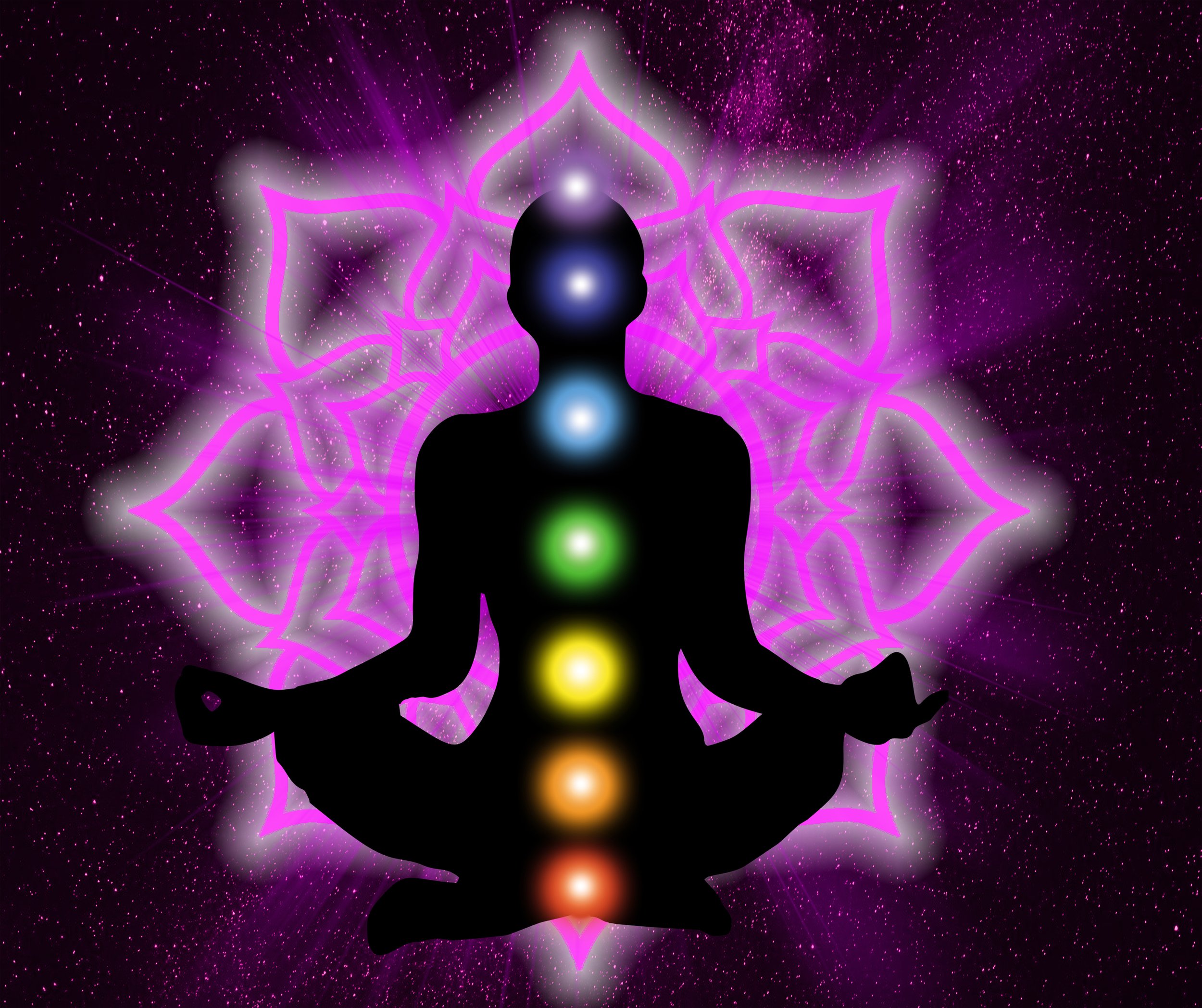
The seven energy centers are associated with particular dimensions of human experience. Over time, Western interpreters increasingly described these dimensions in psychological and developmental terms: belonging, relationship, personal power, love, voice, perception, and spiritual connection. These meanings have emerged through many traditions and generations, and like the chakra map itself, they continue to be interpreted and reimagined.
Like wheels in motion, the chakras are understood to be centers within our inner energy system. They create a channel that flows from the base of the spine to the crown of the head. Chakras function optimally when they remain open and responsive, taking in, transforming, and releasing energy within this flowing current. The more freely each center turns - neither too little nor too much - the more fully we can experience and express that dimension of our lives.
In Anatomy of the Spirit, Caroline Myss also pairs each chakra with a sacred truth, a way the divine becomes accessible through that particular dimension of human experience.
Let’s follow the river, bend by bend, and explore what each center has to teach us.
1. The Root — Belonging
Red | Base of the spine
The root is the energetic headwater of belonging. This center anchors us in the body, the earth, and our family and community - in what Myss calls tribal power. Its sacred truth is “all is one.”
The root teaches us what it means to be grounded in the larger web of life.
When the energy flows freely, we feel grounded, safe, and at home in our own lives. When it becomes constricted, we may feel anxious, unmoored, or gripped by the need to hold tightly to what we have.
2. The Sacral — Relationship
Orange | Lower abdomen and reproductive organs
The sacral center turns us toward relationship. Its energy is associated with creativity, desire, sexuality, and the ways we meet and exchange energy with others - what Myss calls relational power. Its sacred truth is “honor one another.”
The sacral teaches us how to remain connected to ourselves while opening ourselves to the life and energy of another.
When the energy flows freely, we experience warmth, curiosity, creative energy, and an openness to relationship. When it becomes constricted, we may become numb and withdrawn, or so entangled in the needs of others that we lose contact with our own.
3. The Solar Plexus — Selfhood
Yellow | Upper abdomen
This chakra is located at our center of gravity, and its energy shifts the focus back to the self. Here we form a sense of identity, affirm and care about ourselves, and learn the importance of boundaries. Myss calls this personal power. Its sacred truth is “honor oneself.”
The solar plexus teaches us how to inhabit our own lives with confidence, agency, and appropriate boundaries.
When the energy flows freely, we know ourselves. We can act with quiet confidence and establish clear boundaries. When it becomes constricted, we may feel inadequate or shrink from our own lives, or try to control everyone else’s.
4. The Heart — Love
Green | Center of the chest
The heart is a wide and deep center within our inner energy channel. Here lives love, compassion, grief, and forgiveness - what Myss calls emotional power. The heart bridges the physical and spiritual dimensions of the system. Its sacred truth is “love is divine power.”
The heart teaches us how to remain open to love while holding both joy and sorrow, connection and loss.
When the energy flows freely, we can give and receive love and allow grief and loss to move through us. When it becomes constricted, we may protect ourselves behind walls, or give so freely that we eventually become depleted.
5. The Throat — Voice
Blue | Throat
The throat merges the currents of voice and will. Here we give expression to what we know and align our choices with something deeper than personal preference. Myss calls this will power. Its sacred truth is the “surrendering of personal will to divine will.”
The throat teaches us how to bring our inner truth into the world through word and action.
When the energy flows freely, we speak honestly and choose with integrity. When it becomes constricted, we may remain silent about what matters, get locked in uncertainty, or speak from reactivity in ways that wound rather than connect.
6. The Third Eye — Perception
Indigo | Between the brows
The third eye widens into the channel of perception. This center is associated with intuition, insight, and the capacity to see beyond appearances and familiar stories - what Myss calls mind power. Its sacred truth is “seek only the truth.”
The third eye teaches us how to see beyond our habitual perceptions, beliefs, and stories and to recognize what is true beneath the surface.
When the energy flows freely, we see ourselves and our circumstances with greater clarity and can trust our deeper knowing. When it becomes constricted, we may become trapped in rigid beliefs, overthinking, or a persistent fog of confusion.
7. The Crown — Receptivity
Violet or While | Crown of the head
At the crown, we open wide to the sacred current of Life. This center is associated with spiritual presence, guidance, unity, and our sense of being part of something larger than ourselves - what Myss calls spiritual power. Its sacred truth is “live in divine alignment.”
The crown teaches us to recognize the sacred presence that surrounds and flows through us.
When the energy flows freely, we are receptive to sacred guidance and can rest in presence, openness, and trust. When it becomes constricted, we may feel cut off from meaning, over-function as the ego tries to fill the resulting void, or reach for the sacred as an escape from ordinary life rather than inhabiting it more fully.
The Vacillating Current
Notice the movement of this inner flow. Bend by bend, the current vacillates between me and we, between selfhood and interpersonality.
The first bend is about belonging. The second shifts toward relationship and connection. The third returns to the self and personal power. The fourth expands into the compassionate and caring heart. The fifth swings back toward personal agency, will, and voice. The sixth turns toward perception, how we see ourselves, others, and the world. And the seventh opens beyond the individual self into spiritual presence and our relationship with the Divine.
Awareness expands not in a straight line but through this continual movement back and forth.
From knowing ourselves, we move toward one another. From relationship, we return to ourselves. From voice, we move toward perception. From perception, we open toward something larger than ourselves.
A river moves forward by moving side to side. We cannot honor another from an empty self. And we cannot fully know ourselves in isolation.
One River
And still, it is one river.
The chakras are not seven separate ponds but an interconnected system. A blockage in one bend can affect the flow throughout the whole river, backing the water up above it and thinning it out below.
Imagine, for example, that the heart and the third eye have fallen out of sync. We see one thing and feel another. The throat sits between those currents, and the water gets muddy. Our voice may become quiet, sharp, defensive, or disconnected - speaking what we perceive without speaking from a place of love. Sometimes healing the throat begins by clearing the heart.
And this is where spiritual practice can help. Prayer, meditation, breathwork, contemplation, time in nature, sacred reading, or simply becoming still can help us notice where the current has become constricted and gently open ourselves to a deeper flow. The practice itself doesn’t create the sacred; it creates space for us to become more aware of what is already flowing through us.
The deepest invitation of the chakra map is not to become preoccupied with which center is “blocked,” but to become familiar with the whole river - to notice where the current is constricted, where it overflows, and where it flows freely.
The crown chakra is not more sacred than the root. But as we move up the river, the current can flow just a bit more widely. Each bend we tend with honesty and compassion allows more of the water to move through us. We become more receptive to the sacred, to see it, drink it in, and allow it to carry us.
Points to Ponder
Which of your chakras feels full and moving right now? Which feels slow, shallow, or silted?
Do you tend to lean more toward the individual bends or the relational ones? What might the other offer you?
Where do you notice that your voice is out of sync with wise heart or mind?
What might change if you approached a “blocked” place in yourself with curiosity rather than judgment?
Where in your life do you sense the river already flowing freely?
May the sacred current move freely through every bend of your life.